Po (river)
Longest river in Italy, vital to agriculture and industry.

Giorgio Galeotti · CC BY 4.0
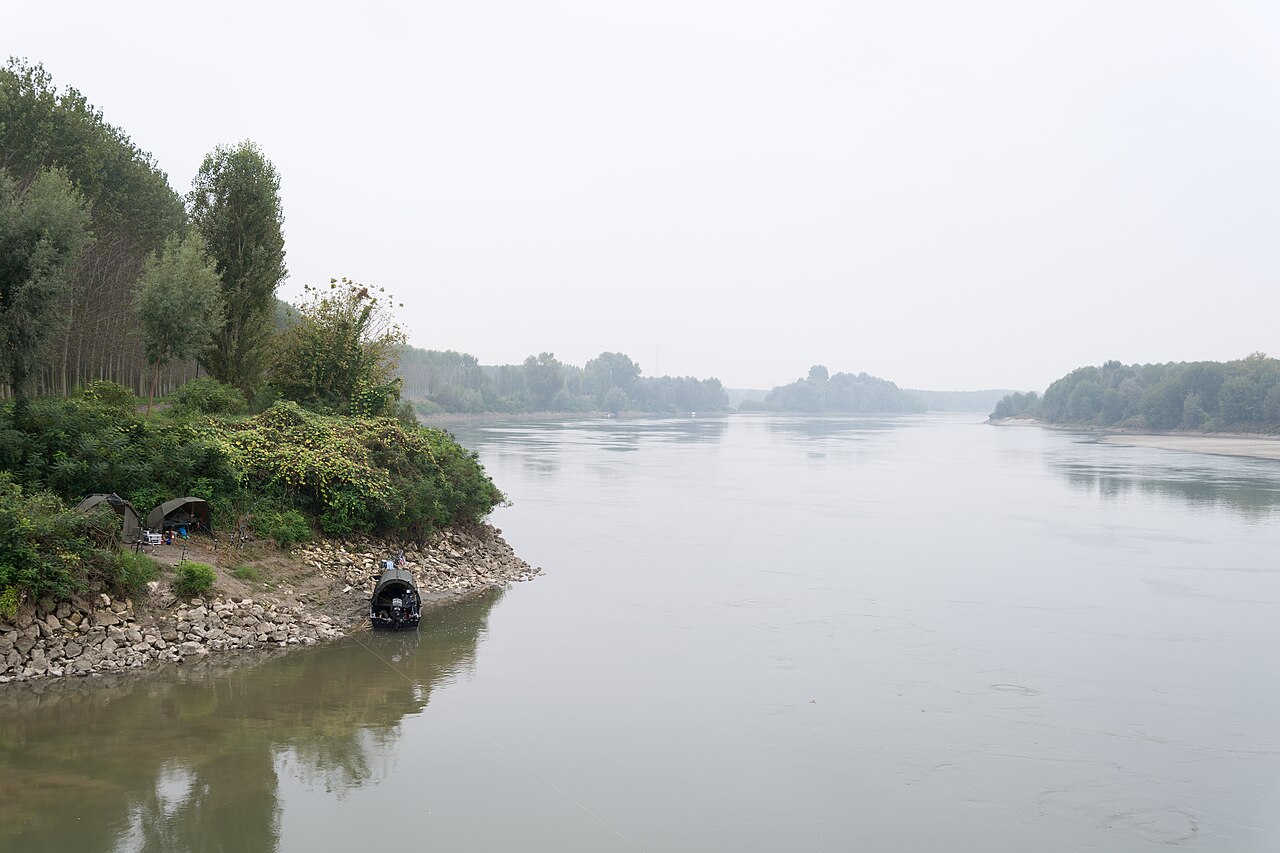
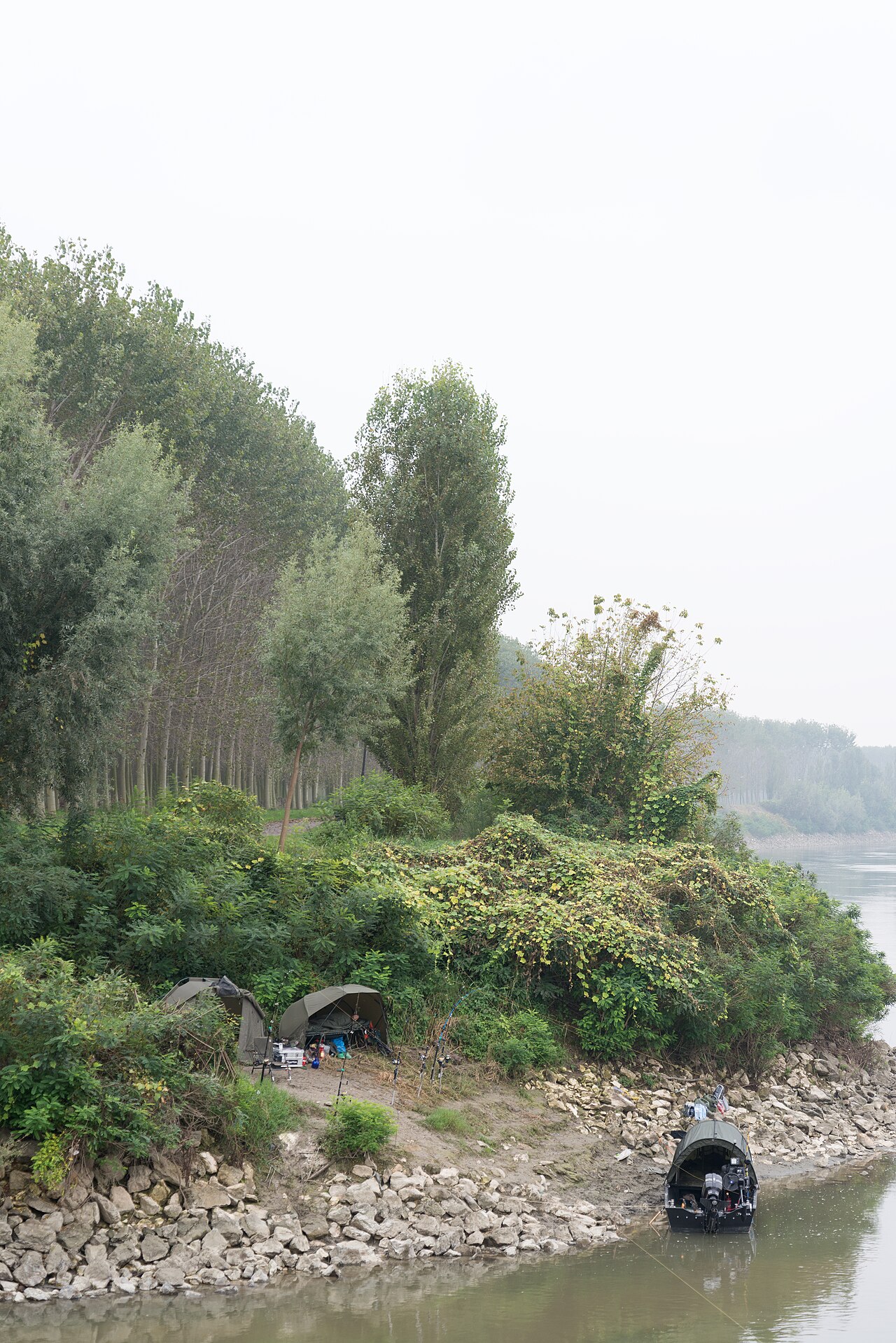
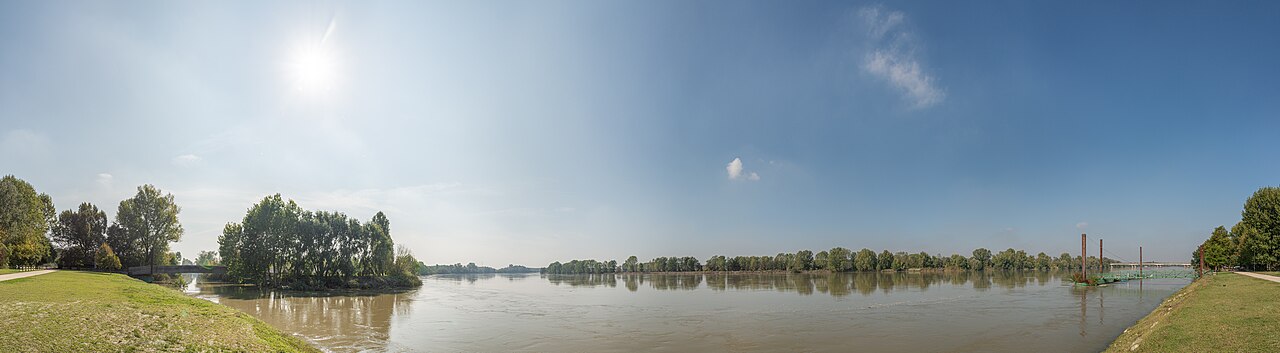
The Po is the longest river in Italy, flowing eastward across northern Italy from the Cottian Alps to the Adriatic Sea near Venice.
- source
- Spring at Pian del Re, Val Po, under Monviso in the Cottian Alps
- mouth
- Delta projecting into the Adriatic Sea near Venice
Lore & Background
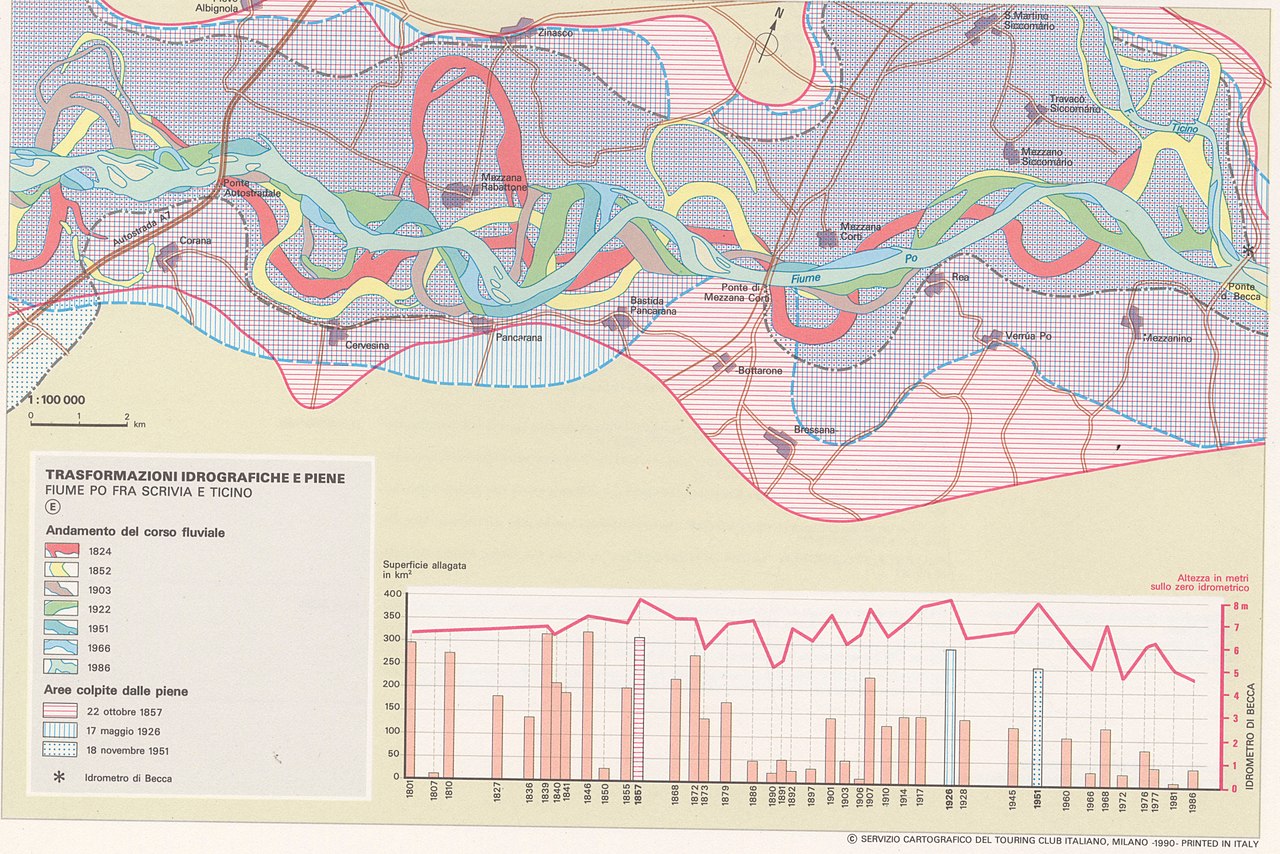
The Po originates from a spring seeping from a stony hillside at Pian del Re, a flat place at the head of the Val Po under the northwest face of Monviso. The river is characterized by its large discharge and heavy flooding, leading to over half its length being controlled with embankments.
Reader's Guide
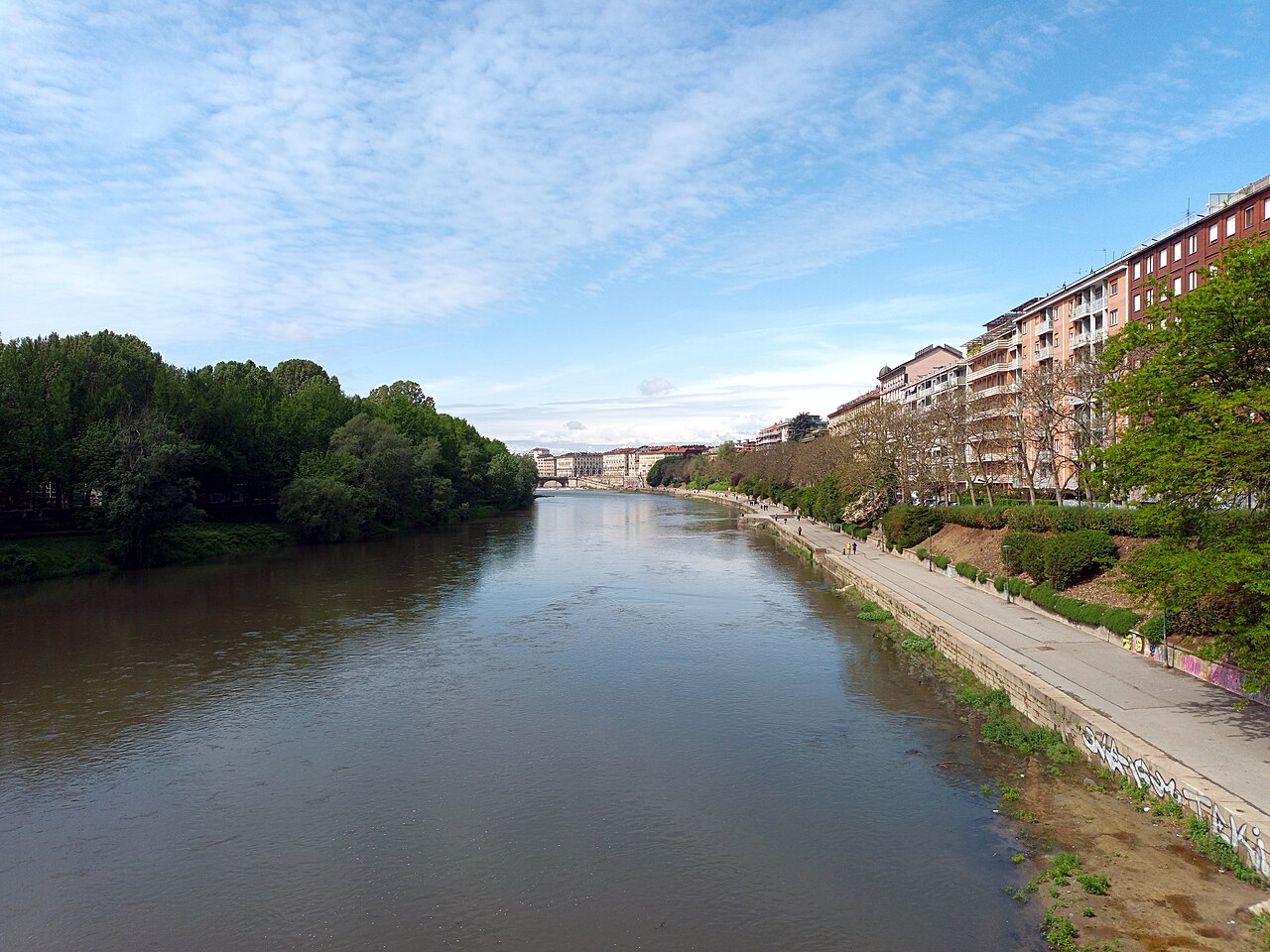
The Po Valley, or Po Basin, is the main industrial and agricultural area of Italy, accounting for 35% of Italian agricultural production. The river flows through important cities including Turin, Piacenza, Cremona, and Ferrara, and is connected to Milan through a net of channels called navigli, which Leonardo da Vinci helped design.
Did You Know?
- The Po is one of three Mediterranean rivers with the largest water discharge, along with the Rhône and Ebro.
- The Po Delta has five main channels: Po di Maestra, Po della Pila, Po delle Tolle, Po di Gnocca, and Po di Goro (Po di Levante is a separate, smaller branch).
- The Reno was a tributary of the Po until the mid-18th century, when its course was diverted to reduce flood risk.
- The Po Valley accounts for 35% of Italian agricultural production.
Geography & Physical Character
The Po is Italy's longest river, stretching 652 kilometres as it carves an eastward path across the nation's northern reaches. Its journey begins in the Cottian Alps, where a modest spring seeps from a stony hillside at Pian del Re—a flat stretch at the head of the Val Po, tucked beneath the northwest face of the Monviso peak. From this humble origin, the river traces a remarkably straight line along the 45th parallel north, eventually reaching a broad delta that thrusts into the Adriatic Sea in the vicinity of Venice. At its widest stretch the channel spans 503 metres, and roughly 450 standing lakes dot the landscape along its course. The valley's gradient is notably gentle, easing from 0.35 percent in the western reaches to just 0.14 percent toward the east. If the Maira, a right-bank tributary, is counted as part of the system, the total length extends to 682 kilometres. The river passes through major cities including Turin, Piacenza, Cremona, and Ferrara, and is linked to Milan by a network of canals known as the navigli, whose design Leonardo da Vinci helped shape.
Hydrology, Flooding & Tributaries
The Po drains a vast basin of 74,000 square kilometres, and its water discharge is exceptional—several rivers exceeding 1,000 kilometres in length carry equal or lesser volumes. Together with the Rhône and the Nile, it ranks among the three Mediterranean rivers with the greatest flow. This abundance of water, however, brings a persistent threat: the river is prone to severe flooding, and more than half its entire length is confined within engineered embankments to protect the surrounding plain. The system is fed by 141 tributaries, the longest being the Adda at 313 kilometres, followed by the Oglio (280 km), the Tanaro (276 km), and the Ticino (248 km). The Tanaro, notably, is roughly 50 kilometres longer than the upper Po at their confluence near Alessandria. One tributary, the Reno, was deliberately diverted away from the Po in the mid-eighteenth century as a flood-mitigation measure. The basin extends beyond Italy's borders: most of the non-Italian portion lies in Switzerland's canton of Ticino, while a tiny sliver in France's Vallée Étroite is so remote that it is effectively administered by Italian services.
The Po Valley: Industry, Agriculture & Population
The expansive plain surrounding the river—known in Italian as the Pianura Padana or Val Padana—constitutes Italy's principal industrial heartland and its largest agricultural zone, responsible for roughly 35 percent of the country's farm output. By 2002, more than sixteen million people called the valley home, representing nearly a third of Italy's total population. Industrial hubs such as Turin and Milan sit on elevated ground away from the river's floodplain, drawing power from hydroelectric plants in the Alpine flanks as well as coal and oil stations that use Po-basin water for cooling. Northern drainage funnels through the scenic Italian Lakes shared with Switzerland, though the proliferation of dams has slowed sediment transport and created geologic complications. The fertile, moisture-rich floodplain is devoted primarily to farming, yielding cereals and—unusually for Europe—rice, which demands intensive irrigation. This irrigation is the single largest consumer of surface water, while industrial and domestic needs are met from underground aquifers. Historically, this territory formed Roman Cisalpine Gaul, split into Cispadane Gaul south of the river and Transpadane Gaul to the north.
The Delta: Nature, History & Human Engineering
The Po's final act unfolds in a wide delta projecting into the Adriatic between Chioggia and Comacchio, a tangle of hundreds of small channels organized around five principal arms: the Po di Maestra, Po della Pila, Po delle Tolle, Po di Gnocca, and Po di Goro. The southern reaches include Comacchio, long celebrated for its eels. Park authorities distinguish an active delta, whose channels still connect the river to the sea, from a fossil delta of channels that once did so but no longer flow. The active delta is a product of human intervention: in 1604, the Republic of Venice redirected the main stream, the Po grande or Po di Venezia, from its course north of Porto Viro to a new channel south of the town, the Taglio di Porto Viro. The goal was to halt the river's slow southward drift, which would have choked the Venetian lagoon with sediment. The settlement of Taglio di Po grew up around the works, and the lock at Volta Grimana sealed the abandoned northern channel, now the Po di Levante. Below Taglio di Po, the Parco Regionale Veneto manages the latest branches, where the Po di Gnocca splits southward and the Po di Maestra veers north at Porto Tolle.
Gallery
Frequently Asked Questions
Why is Po (river) important?
Because it irrigates and powers a vast swath of Italy's farming and manufacturing output, the Po basin is often called the economic engine of the north. Its sheer volume of fresh water makes it indispensable to the millions of people and industries that depend on it.
More in Rivers Of Europe 1-19
Spotted an error? Know more?
This is a living reference — every entry is fact-audited, and reader corrections feed straight into our audit queue. Suggest an edit · See this site's audit record