Moselle
A major Rhine tributary flowing through France, Luxembourg, and Germany.

Didier Descouens · Public domain
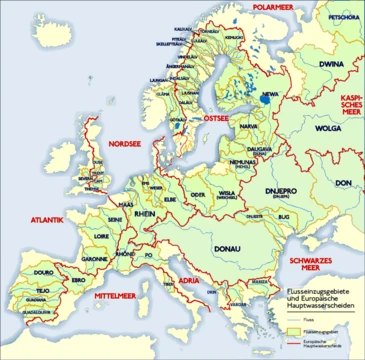
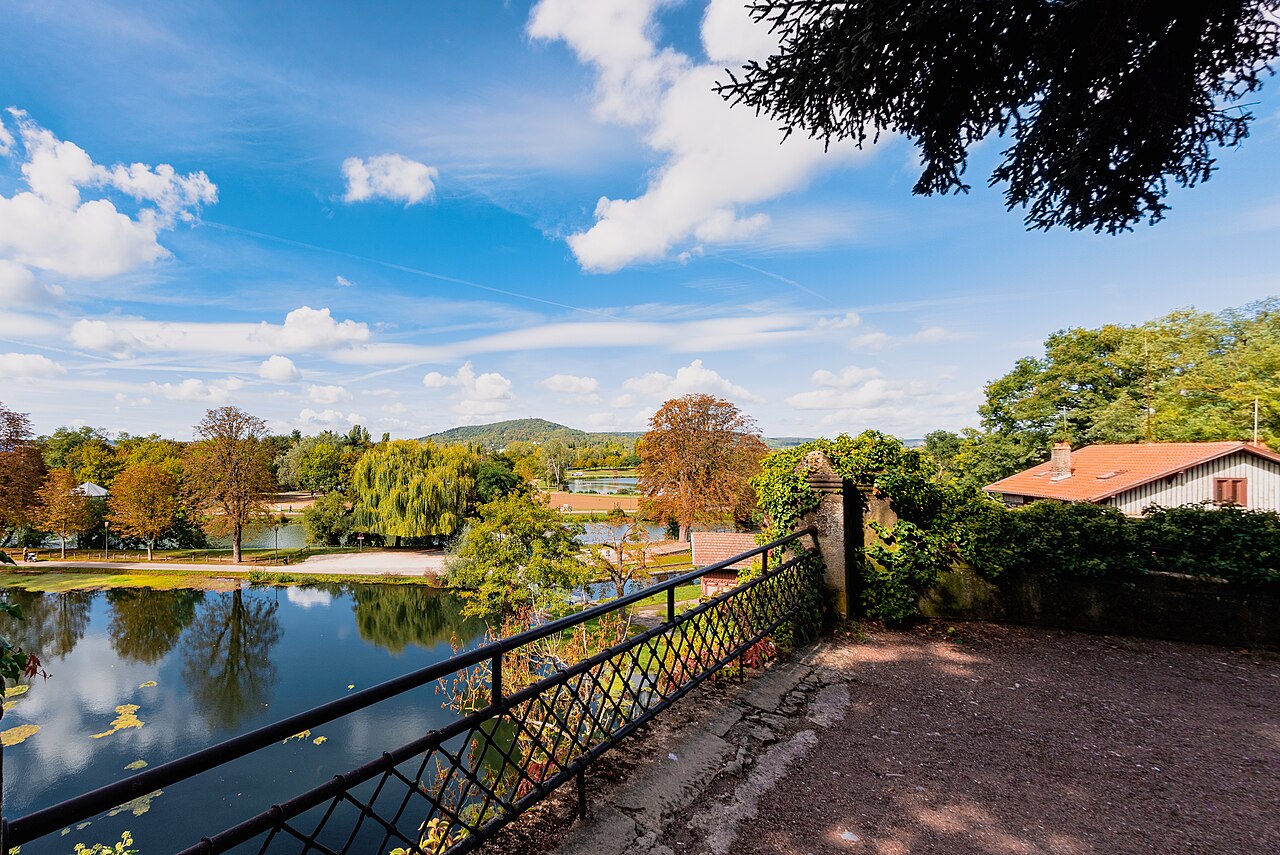
The Moselle is a river that rises in the Vosges mountains and flows through north-eastern France, Luxembourg, and western Germany. It is a left-bank tributary of the Rhine, joining it at Koblenz, and its lower course is known for its beautiful valley, terraced vineyards, and castle ruins.
- countries
- France, Luxembourg, Germany
Lore & Background
The name Moselle derives from the Celtic Mosela, via Latin Mosella, a diminutive of Mosa (the Meuse), meaning 'Little Meuse.' The earliest known reference to the river is by the Roman poet Ausonius in his 4th-century poem Mosella, which recounts a journey from Bingen along the Rhine and then up the Moselle to Trier. The river gave its name to the French départements Moselle and Meurthe-et-Moselle.
Reader's Guide
The Moselle is significant as a historical and geographical boundary, forming part of the border between Germany and Luxembourg and separating the Eifel and Hunsrück mountain regions. Its valley was cultivated by the Romans and is now famous for terraced vineyards producing Riesling wines.
Did You Know?
- The earliest known reference to the Moselle is by the Roman poet Ausonius in his 4th-century poem Mosella.
- The river's name comes from the Latin Mosella, meaning 'Little Meuse.'
- The Moselle's largest tributary by flow is the Saar, which contributes a significantly greater volumetric flow than any other tributary.
Course & Geographic Identity
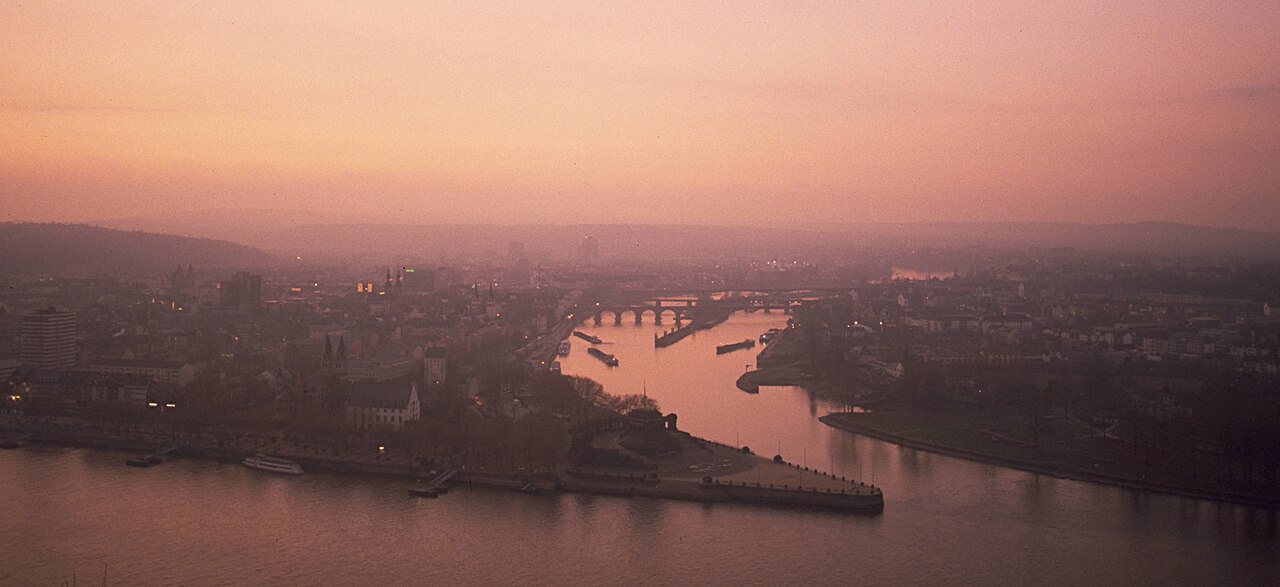
The Moselle begins its journey at an elevation of 715 meters on the Col de Bussang, nestled on the western slopes of the Ballon d'Alsace within the Vosges mountains. Over a total distance of 544 kilometers, it carves a path through three countries before emptying into the Rhine at the Deutsches Eck in Koblenz, where the water level has dropped to just 59 meters above sea level. The river's French stretch spans 313 kilometers through the Lorraine region, then it serves as the border between Germany and Luxembourg for 39 kilometers, and finally runs 208 kilometers entirely within German territory. Downstream of Trier, the valley acts as a natural divide between the Eifel highlands to the northwest and the Hunsrück range to the southeast. The lower reaches, known as the Terraced Moselle, are defined by dramatic meanders deeply incised into the Rhenish Massif, with the Cochemer Krampen between Bremm and Cochem standing as the most spectacular of these curves.
Name, Literature & Cultural Echoes
The river's identity stretches back to Celtic times. The name Moselle descends from the Celtic form Mosela, which passed through Latin as a diminutive of Mosa, the Roman term for the Meuse, a river that once ran roughly parallel to the Moselle. In essence, the Mosella meant the Little Meuse. The earliest written reference to the river appears in the work of the Roman historian Tacitus, who mentioned it in both Book 13 of his Annals and Book 4 of his Histories. Centuries later, the poet Ausonius elevated the river to a subject of literary celebration. In 371, while serving as a teacher at the Imperial Court in Trier, he composed a 483-line hexameter poem called Mosella, describing a journey from Bingen over the Hunsrück hills and following the river's course to Trier along what would become known as the Via Ausonia. His verses painted a picture of flourishing landscapes shaped by Roman governance. The river's cultural weight endures today in the names of two French départements: Moselle and Meurthe-et-Moselle.
Wine, Castles & the Living Valley
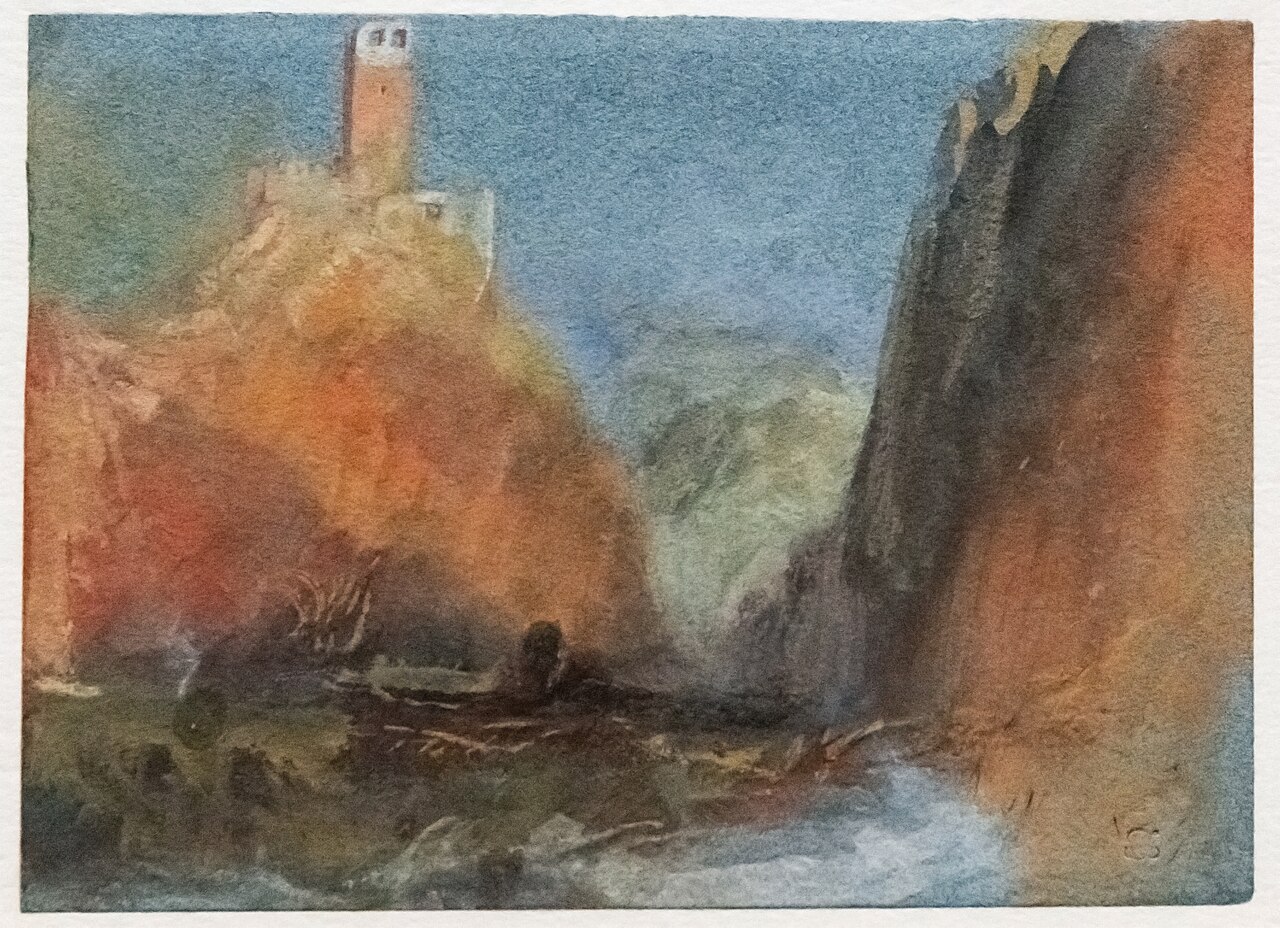
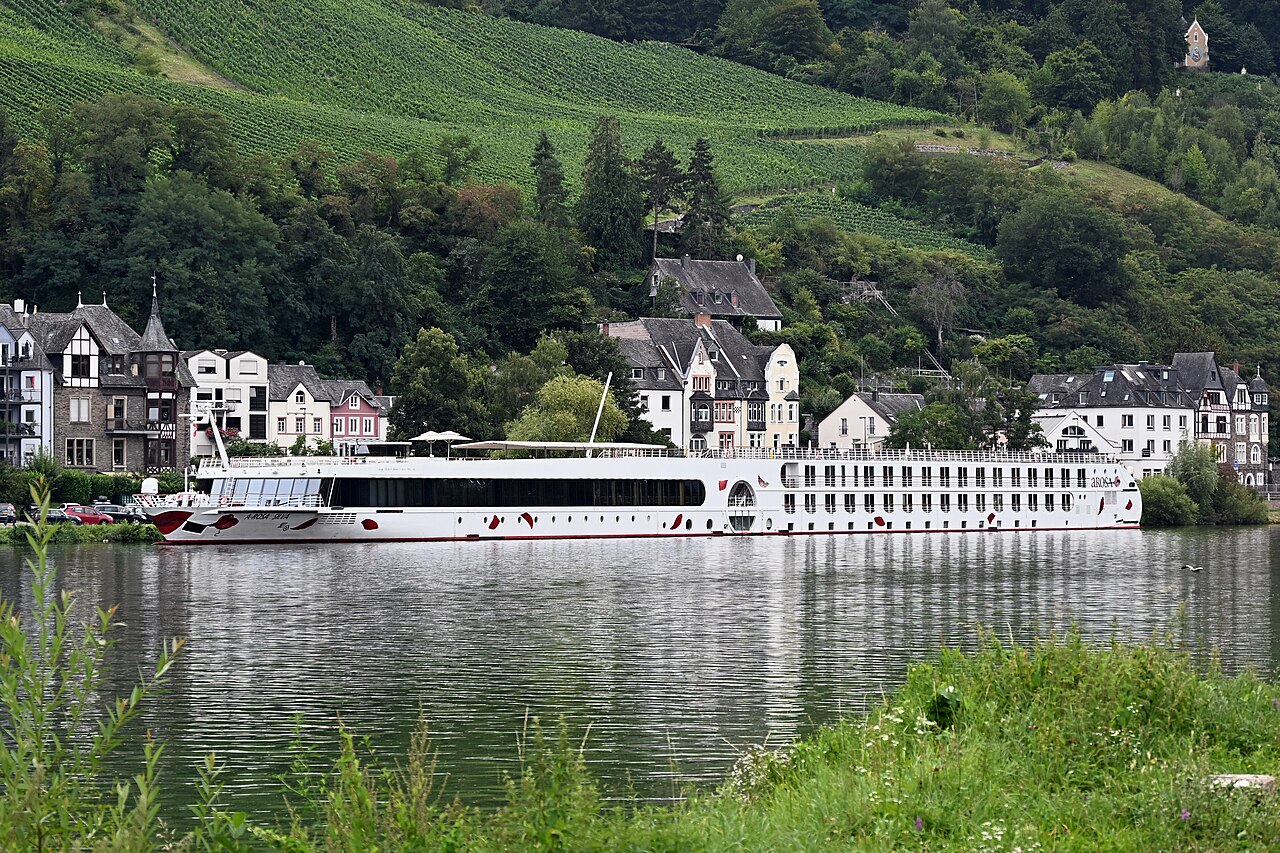
The stretch of the Moselle between Trier and Koblenz is widely regarded as one of Germany's most visually stunning river valleys, and its character owes much to Roman-era cultivation that set the stage for centuries of viticulture. Today, the steep hillsides on both banks are draped in terraced vineyards producing some of the world's finest Riesling wines. Perched above the wine villages and towns dotting the slopes, numerous castle ruins crown the hilltops, lending the landscape an air of medieval grandeur. Two towns in particular draw visitors: Traben-Trarbach, celebrated for its Art Nouveau architectural heritage, and Bernkastel-Kues, known for its traditional market square. The valley's beauty is framed by the Eifel highlands stretching northward into Belgium and the Hunsrück range to the south. This combination of cultivated slopes, historic ruins, and dramatic natural scenery makes the lower Moselle a region where agricultural tradition, architectural heritage, and geological grandeur converge into a single, cohesive landscape.
Hydrology, Tributaries & Deep Time
The Moselle delivers an average of 328 cubic meters per second into the Rhine, making it the second-largest tributary of the Rhine by volume, surpassed only by the Aare at 560 cubic meters per second. Its catchment area spans 28,286 square kilometers, with the French portion accounting for roughly 54 percent. Three major tributaries feed the system: the Meurthe, the Saar, and the Sauer. The Saar is both the longest at 246 kilometers and the largest by flow at 78.2 cubic meters per second. Interestingly, the Moselotte, a right-bank tributary, contributes about 40 percent more water than the Moselle itself at their confluence, effectively making it the main branch of the system. Geologically, the Vosges source region dates to approximately 50 million years ago. During the Miocene and Pliocene epochs, the ancient Moselle already fed into the proto-Rhine. It was the slow uplift of the Rhenish Massif during the Quaternary period that carved the dramatic meanders now visible between the Trier Valley and the Neuwied Basin.
Gallery
Frequently Asked Questions
Who is Moselle?
The Moselle is a river born in the Vosges mountains of north-eastern France that travels through Luxembourg and western Germany before feeding into the Rhine. It is a left-bank tributary, meaning it joins the Rhine from the western side.
What is Moselle's role in the river system?
As a major left-bank tributary of the Rhine, the Moselle contributes a significant share of water to one of Europe's largest river networks. Its three-country course links the French interior to the broader Rhine basin.
How does Moselle's story end?
The Moselle's independent journey concludes at Koblenz, Germany, where it merges with the Rhine at the well-known confluence point called the Deutsches Eck. From that moment onward, its waters are indistinguishable from the Rhine's.
Why is Moselle important?
The lower Moselle valley is world-renowned for its steep terraced vineyards, scenic castle ruins, and navigable shipping channel, making it both a cultural landmark and a functional waterway. It is one of the most celebrated wine-growing corridors in all of Europe.
Which countries does Moselle flow through?
The river passes through France, Luxembourg, and Germany in sequence, starting in the Vosges and ending at its confluence with the Rhine. This three-nation path makes it one of the few major European rivers to cross that many borders.
More in Rivers Of Europe 1-19
Spotted an error? Know more?
This is a living reference — every entry is fact-audited, and reader corrections feed straight into our audit queue. Suggest an edit · See this site's audit record