Frequently Asked Questions
The most-asked questions about rivers of europe.
What is this encyclopedia actually about?
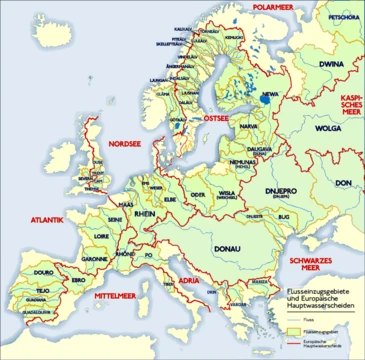
It is a community-built reference devoted to the major river systems of Europe, covering geography, history, culture, and ecology of waterways from the Atlantic coast to the Caspian Sea.
Which rivers are the 'main characters' most readers look up?
The Danube, Rhine, Volga, and Dnieper dominate the site's traffic because they are the longest, most historically layered, and most politically significant waterways on the continent.
Where should a newcomer begin exploring?
Start with the Danube entry, since it threads through ten countries and links dozens of major cities, giving you a broad geographic and cultural baseline before you branch into smaller basins.
What is the longest river entirely in Europe?
The Volga in Russia runs roughly 3,530 km from the Ural foothills down to the Caspian Sea, making it the longest river whose full course lies within the European portion of the continent.
Which river matters most for trade and shipping?
The Rhine has been Europe's commercial artery for over a millennium, connecting the North Sea to inland industrial hubs and still handling a large share of the continent's inland freight.
What are some 'notable moments' tied to these rivers?
Highlights include Roman legions crossing the Rhine, the 1914 Meuse crossings during World War I, and the post-1945 division of Danube navigation rights, all of which reshaped borders and economies.
How many nations do the major rivers cross?
The Danube flows through ten countries, the Rhine through four, and the Dniester through two, so shared management and border disputes are recurring themes throughout the entries.
How does the site distinguish a main river from its tributaries?
Each main stem (e.g., the Danube) gets its own top-level article, while tributaries like the Morava or the Inn are listed as sub-entries that link back to the parent river for context.
Do any rivers define a whole country's identity?
Yes—the Seine is woven into French literature and Parisian life, the Danube anchors Hungarian national memory, and the Thames is central to English urban and cultural history, and the encyclopedia treats each as a cultural landmark in its own right.
Is this an official or government source?
No, it is a volunteer-maintained, unofficial fan project; all entries are community-written and peer-reviewed by editors, so readers should cross-check figures against hydrological agencies for precision.